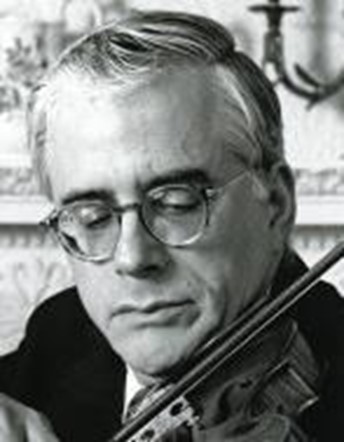
Michael Louis Nieland, M.D., a resident of Moon Township, PA and formerly of Squirrel Hill, Pittsburgh, PA (1972-2020), died January 21, 2026, at University of Pittsburgh Medical Center (UPMC) Shadyside due to complications of cardiac amyloidosis. He was 87 years old. Michael’s survivors include his beloved and devoted wife, Lilli June; three beloved children, Jennie Louise Niedelman (Chakra) Chennubhotla, Nathaniel Ezra (Angela) Nieland, and Ariel Emily Forbes; and five adored grandchildren, Nancy Grey Forbes, Jasper Hart Forbes, Ethan Ezra Nieland, Starla Daisey Forbes, and Dylan Claire Nieland.
Michael was born in Baltimore on December 13, 1938, and moved with his parents to Boston in 1943 when his father, a cellist, joined the Boston Symphony Orchestra after playing for 10 years in the National Symphony Orchestra, where he was Assistant Solo Cellist. Michael grew up in Boston and attended the Boston Latin School, Harvard College where he was a member of Lowell House and, concentrating in biology from which he graduated with the Class of 1960 with an A.B. cum laude degree, and Harvard Medical School, receiving his M.D. in 1964.
Michael was an intern and resident in medicine for two years at the University of North Carolina in Chapel Hill, then a research associate (lieutenant commander, US Public Health Service) in the Laboratory of Parasitic Diseases at the National Institute of Allergy and Infectious Diseases (1966-1968), then a research fellow in dermatology at the Johns Hopkins Hospital (1968-1970), then the Earl D. Osborne Fellow in Dermatopathology at the Armed Forces Institute of Pathology (1970-1971), followed by a three-year Veterans Affairs (VA) Career Development Award.
After spending the first year of the award in Memphis, Michael transferred to the Pittsburgh VA Hospital, where he became Chief of Dermatology and joined the faculty of the University of Pittsburgh School of Medicine. During his research years, he published a number of first-authored papers utilizing the electron microscope, biochemical techniques, and light and immunofluorescence microscopy. While at Pitt, he founded the first dermatopathology laboratory at the medical school and for two years was acting director of the Division of Dermatology and of the Dermatology Training Program.
When Michael entered private practice in 1977, he established the first private laboratory devoted to dermatopathology in Western PA (Pittsburgh Skin Pathology Laboratory, P.C.), and he was the first physician in Western PA to earn the Special Competence Certificate in Dermatopathology awarded by the American Boards of Dermatology and Pathology. At the time of Michael’s retirement from teaching at Pitt, he was an associate clinical professor of pathology. After many years practicing clinical office dermatology as well as dermatopathology, Michael spent his last 12 active professional years as regional director of dermatopathology at Quest Diagnostics. During all of Michael’s practice years, his skills in the early diagnosis of malignant melanoma and of other skin diseases saved the lives of hundreds of patients. He was especially proud of the fact that because he did not subscribe to bogus or fraudulent concepts rampant in his field and now largely abandoned, such as that of the so-called "dysplastic" nevus (mole), and because he did not practice defensive medicine, however lucrative, he confidently and successfully spared tens of thousands of patients with problematic nevus-melanoma issues the trauma of unnecessary additional surgery.
Michael was intensely interested in family issues, and his child custody ordeal was the subject of discussion in 1998 in three issues of the Pittsburgh Legal Journal. His 10-year saga in the ethical squalor of the Allegheny County Family Division was documented by Robert Mendelson in the 547-page expose entitled "A Family Divided: A Divorced Father's Struggle with the Child Custody Industry" (Prometheus Books, Amherst, NY, 1997). Eventually, the psychologist appointed by the court in Michael’s case was censured by the Greater Pittsburgh Psychological Association and the Pennsylvania Psychological Association, and he was reprimanded and put on probation by the American Psychological Association. Also, Michael was for a time the president of the Pittsburgh Chapter of the Children's Rights Council.
Michael was known as an accomplished violinist and supporter of music and musicians. He frequently played chamber music in his home with members of the Pittsburgh Symphony Orchestra and other professional musicians, and he was a past member of the Advisory Board of the PSO, of the Pittsburgh Youth Symphony Orchestra (Executive Vice President), of the Bedford Springs Festival, of the Y Music Society, of the Pittsburgh New Music Ensemble, and of the Rodef Shalom Music Committee. Michael was known also as an art collector. He gifted a substantial collection of late 19th- and early 20th-century figurative sculpture to the permanent collection of the Westmoreland Museum of American Art. These beautiful and alluring objects were the subject in 2017 of an exhibition at the museum and a magnificent 252-page catalog entitled "A Timeless Perfection: American Figurative Sculpture in the Classical Spirit: Gifts from Dr. Michael L. Nieland to the WMAA." Michael also donated many examples of European sculpture and decorative arts to the permanent collection of the Carnegie Museum of Art.
In addition, Michael and his mother, Stella, permanently endowed his father's chair in the Boston Symphony Orchestra, and he gifted, inter alia, to the BSO a large collection of rare and out-of-print books on bows and stringed instruments and two fine 18th-century Italian instruments, a Nicolo Gagliano violin (1778) and the ex-Zazofsky G.B. Guadagnini violin (1754), in loving memory of his father, Mischa, a member of its cello section for 45 years. These instruments are now played in the Orchestra by its members.
Yet another project of which Michael was especially proud was his initiation and facilitation of publication of the Silvertrust edition, with the cooperation of the DaVinci String Quartet, of Charles Martin Loeffler's previously unpublished String Quartet (1889). He also arranged its first-ever complete performance in Symphony Hall, Boston, by the DaVinci Quartet. Loeffler was, for many years at the turn of the last century, the BSO's assistant concertmaster, and he was, at the time, America's most renowned composer. Michael also had the honor of addressing the audience in Carnegie Music Hall before the performance of Loeffler's "A Pagan Poem" for piano and orchestra with the Duquesne University Symphony Orchestra under the direction of the late Sydney Harth. Professor Harth had also previously invited Michael to play in the orchestra's violin section. A chamber music memorial service in Michael’s memory is planned for a later date and time. The Chamber Music Memorial Service shall be held at Michael's former 1400 Inverness Avenue residence. There will be no viewing. Interment is private at West View Cemetery of Rodef Shalom Congregation in Pittsburgh. Arrangements entrusted to Ralph Schugar Chapel Inc. www.schugar.com.
A slightly modified of the obituary published by Tribune Review on January 25, 2026.